
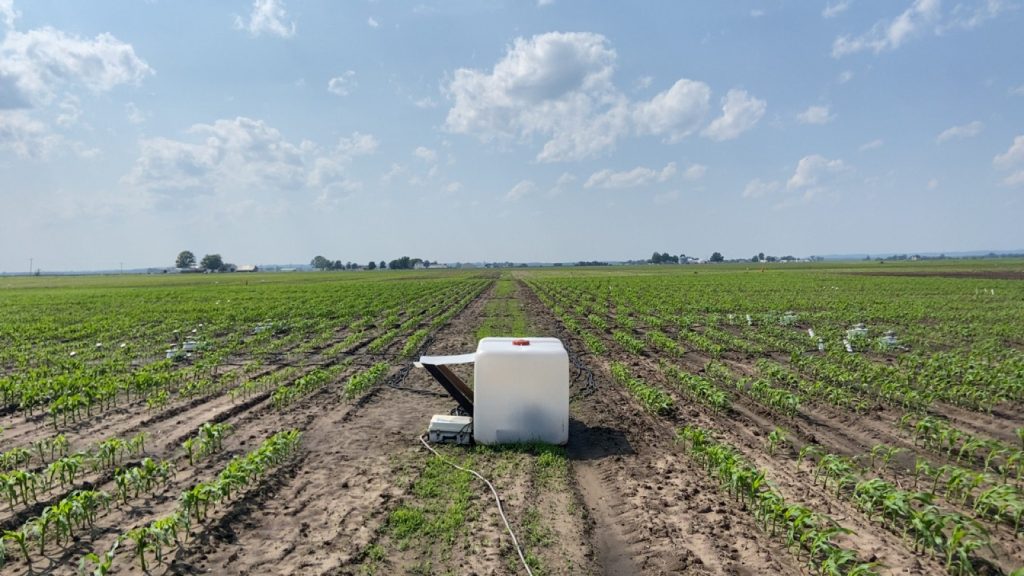
SYNCORNET examines how nitrogen moves through agricultural systems and how plant traits, soil processes, and microbial interactions can be coordinated to improve nitrogen use over time.
Nitrogen availability in soil is dynamic. It changes in form, location, and accessibility throughout the growing season, while plant demand increases as crops develop. In current systems, these processes are often misaligned, leading to nitrogen loss and reduced efficiency.
SYNCORNET addresses this challenge by developing and evaluating root–microbe–nitrogen efficient ideotypes—combinations of plant traits and biological interactions designed to better synchronize nitrogen supply with plant demand across the crop cycle . This approach combines genetic and trait-based engineering, microbial ecology, and field-scale evaluation to improve nitrogen capture and retention within agricultural systems.
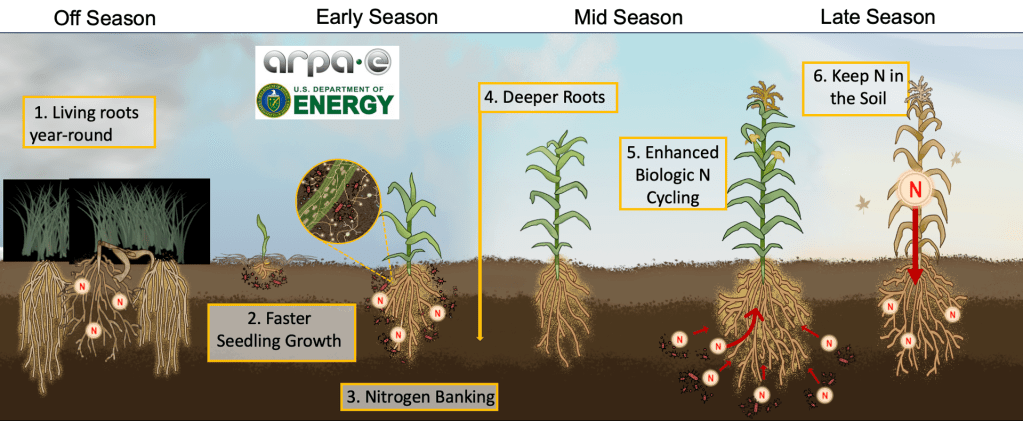
A Coordinated System Across the Growing Season
Nitrogen use efficiency emerges from processes that occur across the entire growing season and into the off-season. SYNCORNET focuses on how these processes can be improved and connected:
- Early season — increasing nitrogen capture when fertilizer is most available
- Mid season — extending root access to nitrogen as it moves deeper in the soil profile
- Late season — enhancing biologically mediated nitrogen cycling during peak crop demand
- Off season — retaining nitrogen within the system to reduce loss and support future crops
These stages are linked through plant traits, soil processes, and microbial activity, forming a coordinated nitrogen system.
Research Areas
Root System Engineering
Designing maize root architectures that improve nitrogen uptake by increasing access across soil depth and sustaining uptake over time.
Mycorrhizal Symbiosis
Leveraging arbuscular mycorrhizal fungi (AMF), beneficial soil fungi that form partnerships with plant roots to increase nutrient acquisition and improve nitrogen efficiency.
Soil Processes & Nitrogen Cycling
Understanding how soil processes and microbial activity regulate the availability and movement of nitrogen in agricultural systems.
Nitrogen Timing
Examining how nitrogen availability and plant demand change over the crop cycle and how these dynamics can be better aligned.
Field Validation
Evaluating integrated root–microbe–nitrogen strategies under field conditions to assess system performance and scalability.
From Components to System Performance
Each research area addresses a different part of the nitrogen cycle, but their combined effect determines overall system performance.
SYNCORNET integrates these components through coordinated trait development and field evaluation to improve nitrogen capture, reduce losses, and maintain crop productivity without increasing inputs.
A central objective of this approach is to substantially reduce nitrogen fertilizer requirements–targeting reductions on the order of 50% or more–while maintaining crop yield under field conditions.

