
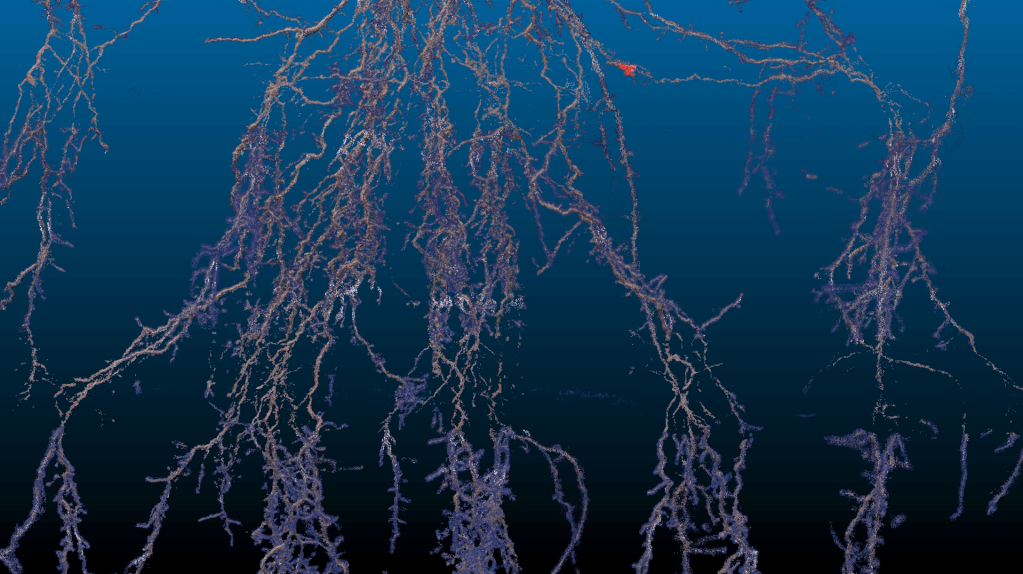
Arbuscular mycorrhizal fungi (AMF) form symbiotic relationships with plant roots, extending the effective reach of the root system into the surrounding soil. Through these associations, fungi access nutrients beyond the immediate root zone and transfer them to the plant in exchange for carbon.
These interactions play an important role in nutrient acquisition, particularly in soils where nutrients are unevenly distributed or not readily accessible to roots.
Extending Access to Soil Nitrogen
AMF develop networks of fine filaments, or hyphae, that extend into the soil beyond the physical reach of roots. These networks can access nitrogen located in soil microsites that roots alone may not reach.
By expanding the zone of nutrient uptake, AMF complement root system architecture and increase overall nitrogen capture.
Contribution to Nitrogen Uptake
Although AMF are often associated with phosphorus uptake, they also contribute to nitrogen acquisition, particularly in forms that are less mobile or not immediately accessible to roots.
SYNCORNET examines how these mycorrhizal pathways contribute to nitrogen uptake and how they interact with root traits under field conditions.
Variation in Plant–Fungal Interactions
The effectiveness of mycorrhizal symbiosis depends on both plant and fungal factors. Different maize genotypes vary in their responsiveness to AMF, and environmental conditions influence the strength and function of these interactions.
Identifying plant–fungal combinations that improve nutrient acquisition is central to understanding how these interactions can be used in agricultural systems.
Performance in Agricultural Systems
AMF function within complex soil environments shaped by management practices, soil conditions, and climate. Their contribution to nitrogen uptake depends on how these factors influence fungal activity and colonization.
SYNCORNET evaluates mycorrhizal interactions under field conditions to determine how they contribute to nitrogen uptake across environments.
Role Within the System
Mycorrhizal symbiosis provides a complementary pathway for accessing nitrogen that extends beyond the reach of roots. By increasing the volume of soil explored, these fungal networks help bridge gaps between where nitrogen is available and where plants can access it.
These interactions are closely linked to root system function and soil processes, contributing to SYNCORNET’s broader goal of coordinating nitrogen availability with plant demand across the crop cycle.

